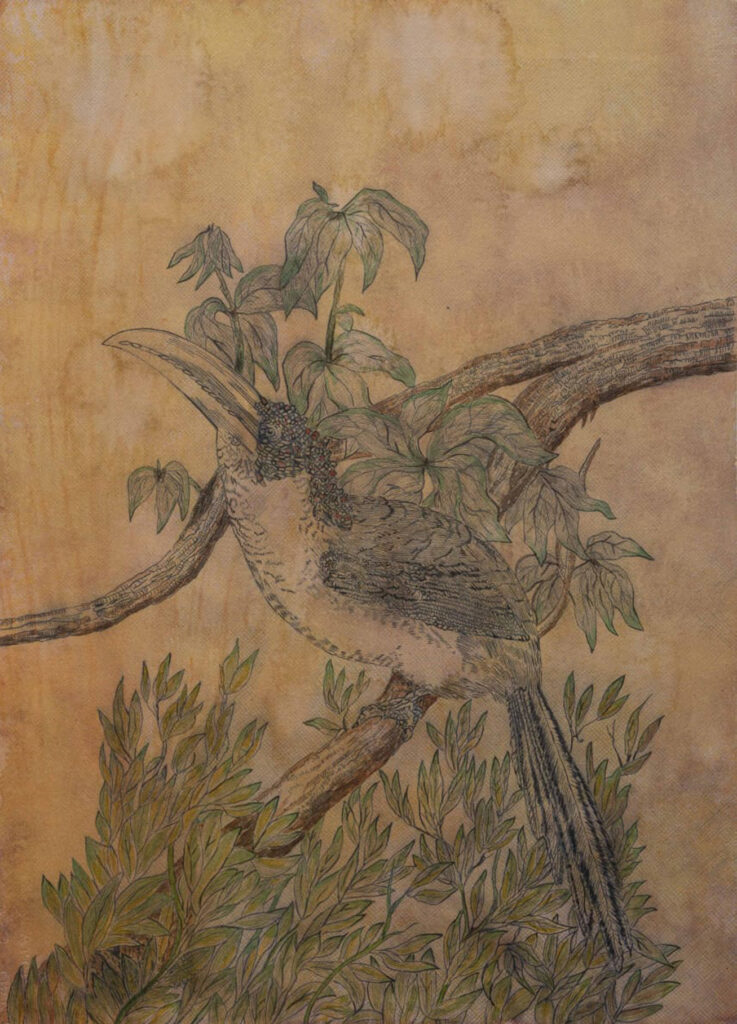
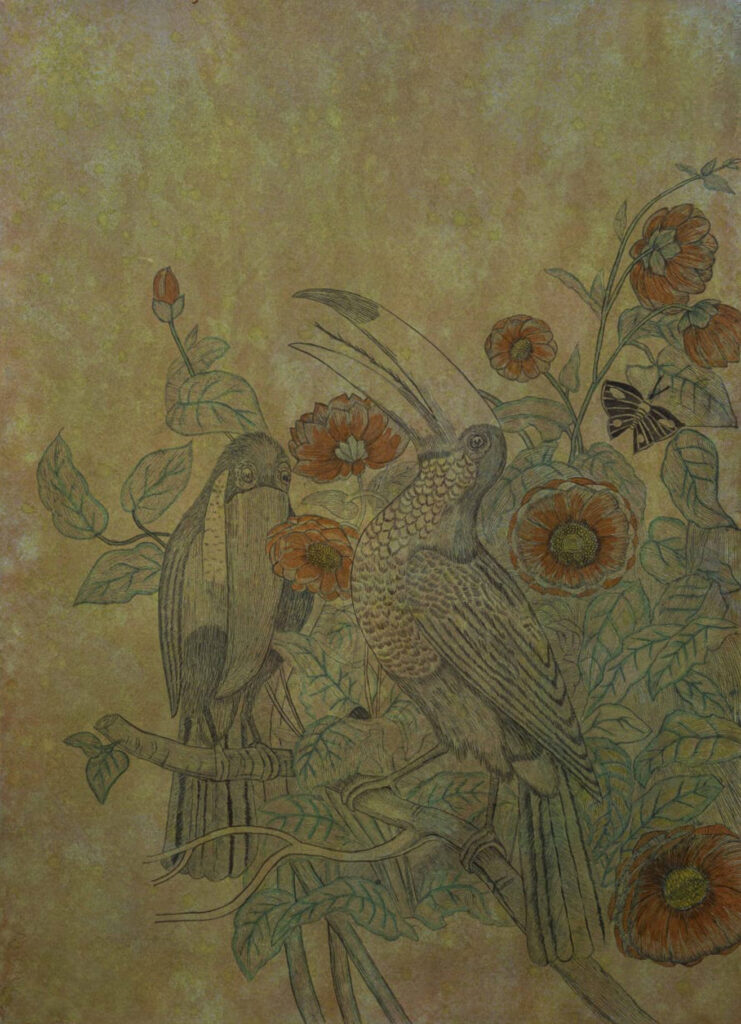
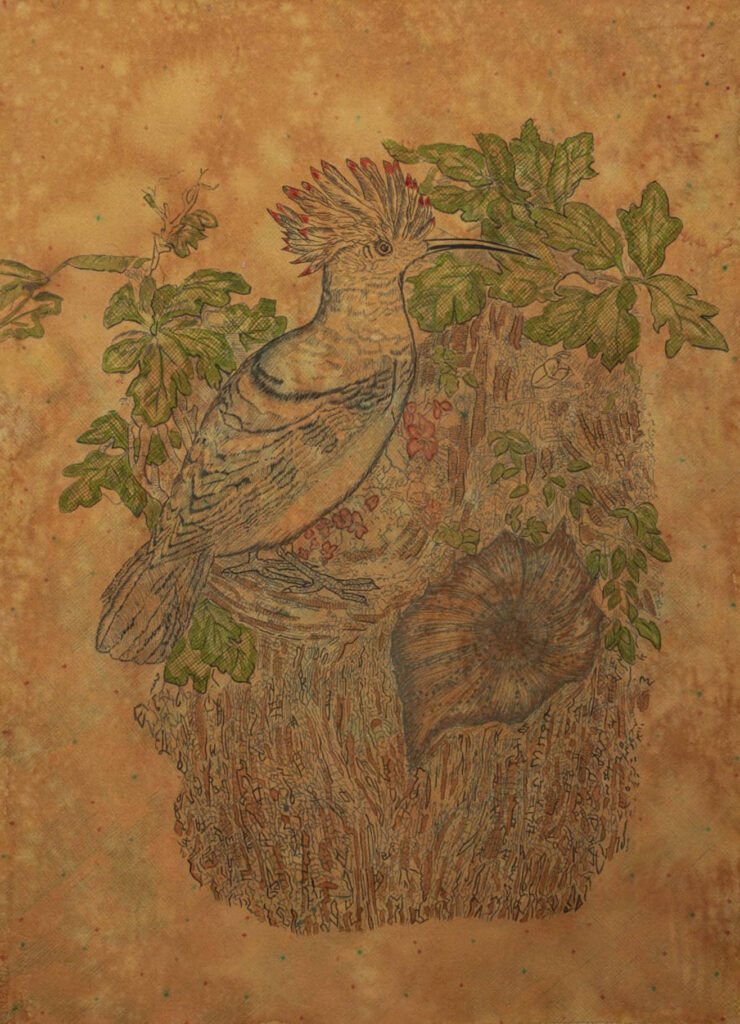
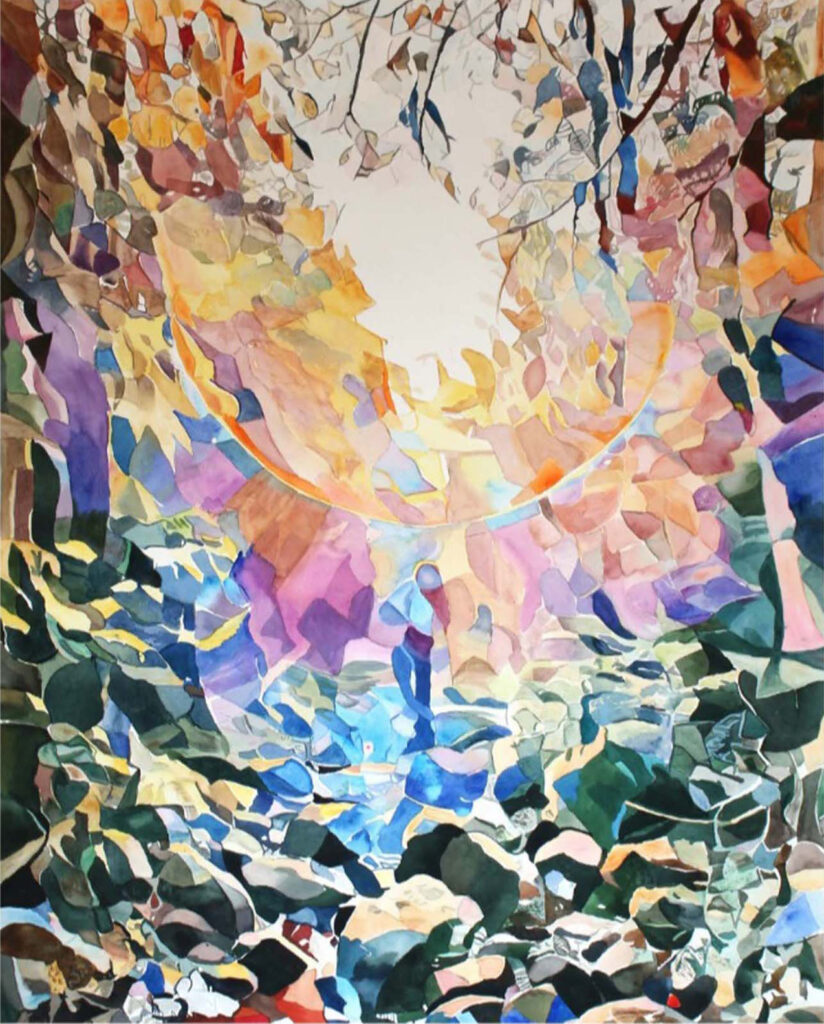
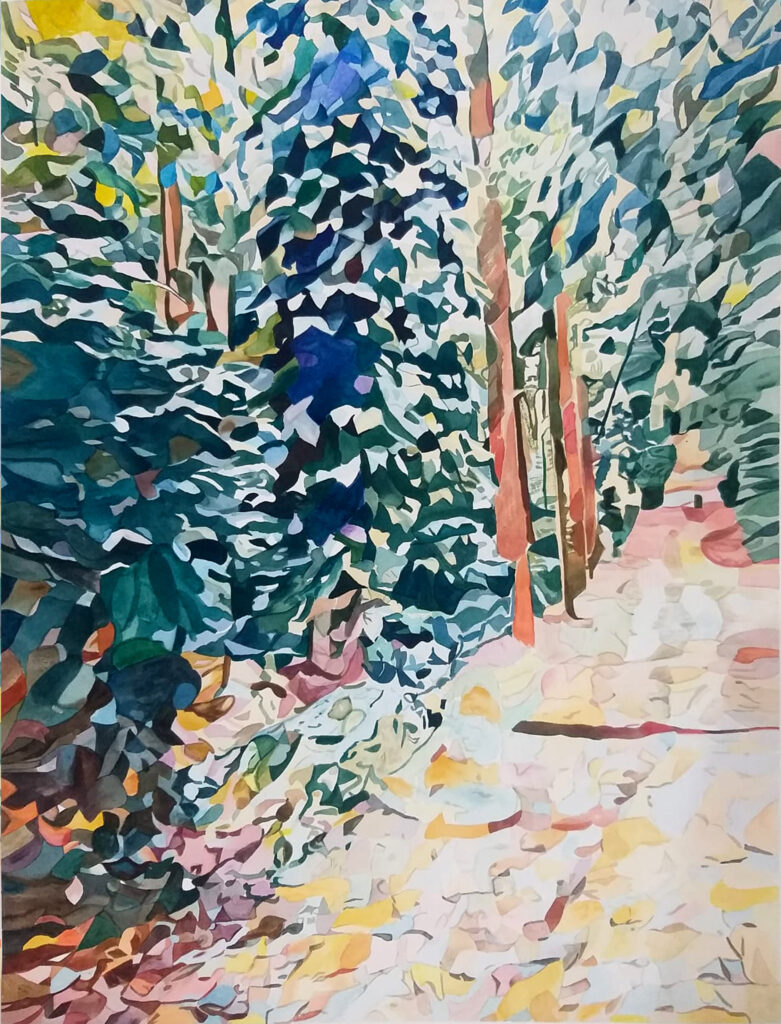
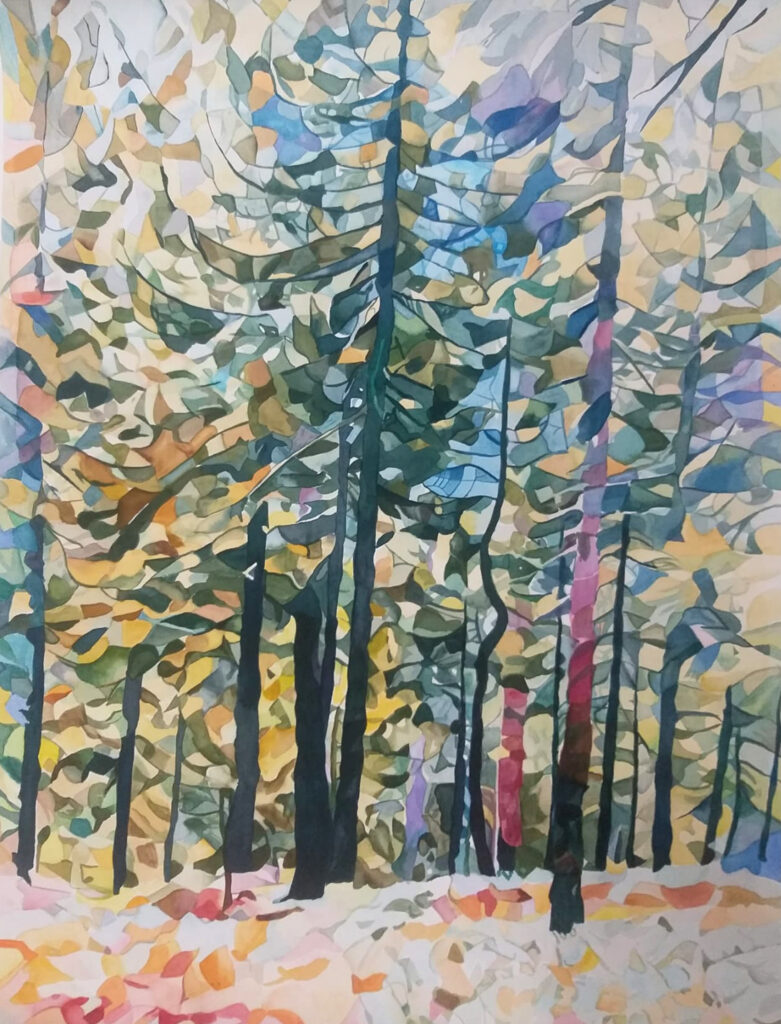
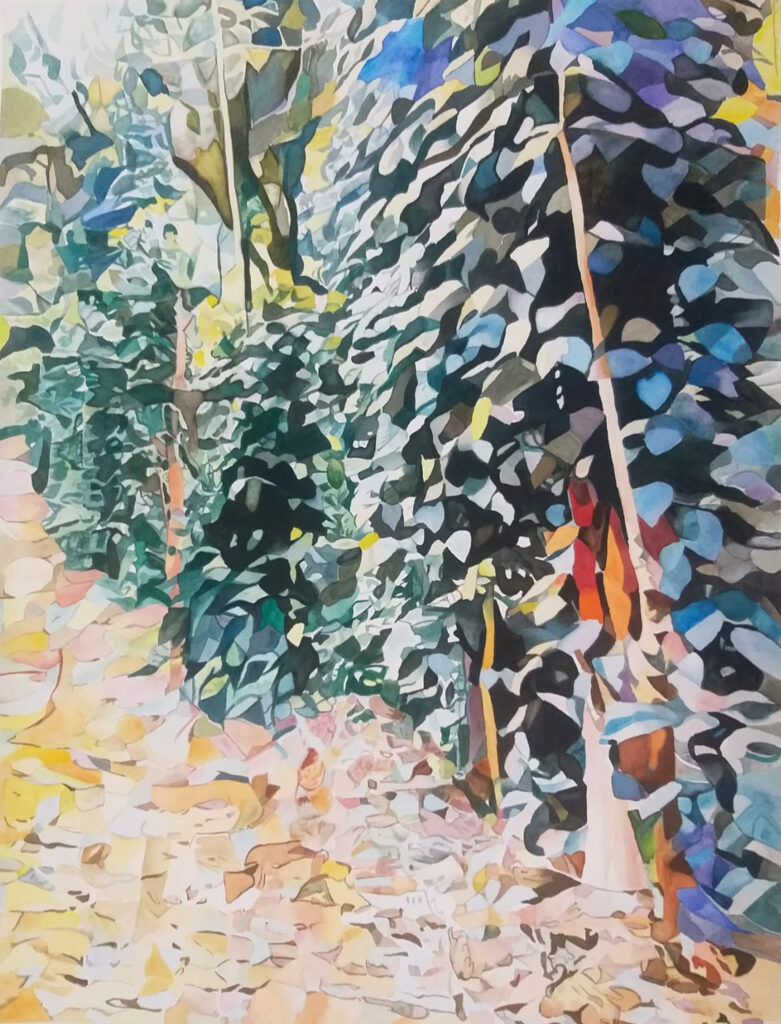
The artist also pays tribute to birds, the hornbill and the hoopoe perched on plants and trees that they almost seem to merge with the trees and become one with nature. The hoopoe is known by its cinnamon coloured body that is marked with black-and-white wings, a tall erectile crest, or crown as it is often called, and a broad white band across a black tail. Its long narrow down-curved bill is what allows it to probe the ground and hunt for insects. Surprisingly one species of hoopoe has gone extinct which we as common people do not even know about. The hornbill is characterized by a long, down-curved bill which is frequently brightly coloured, although in these paintings the artist chooses to render them in black and white against a sepia coloured backdrop, almost as one would do with an old photograph. There is something extremely lyrical and gentle about these images of the birds that stand out as different and arresting from the artist’s study of forests.
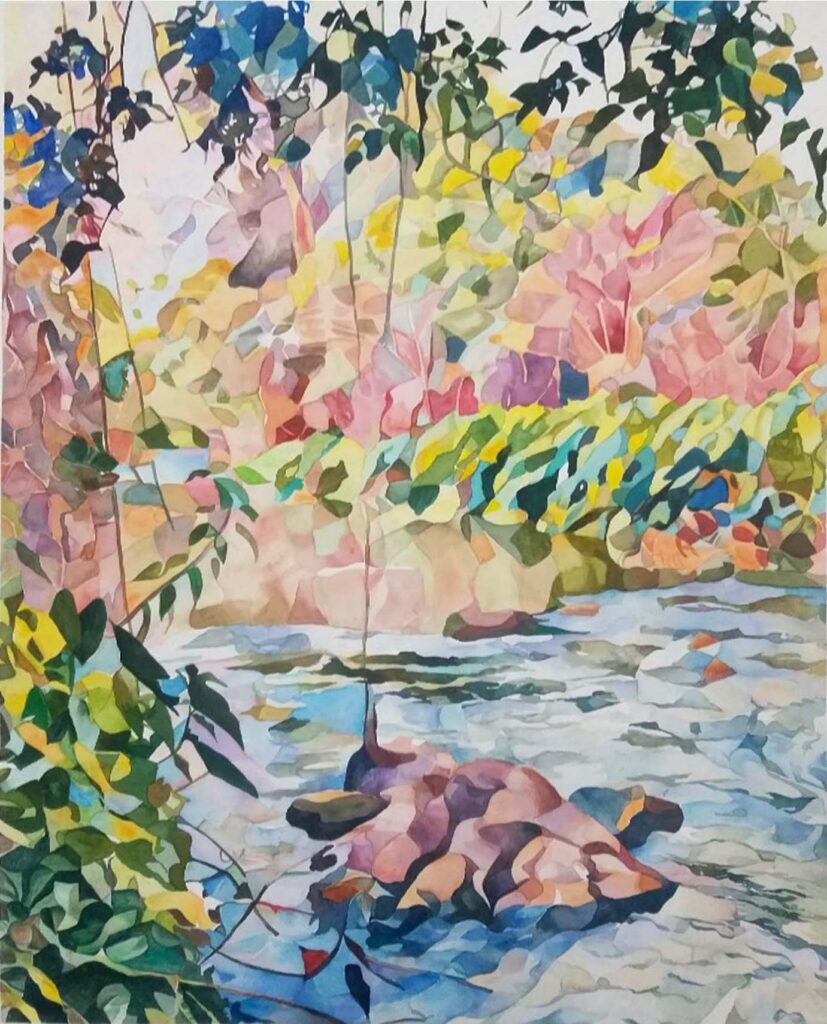
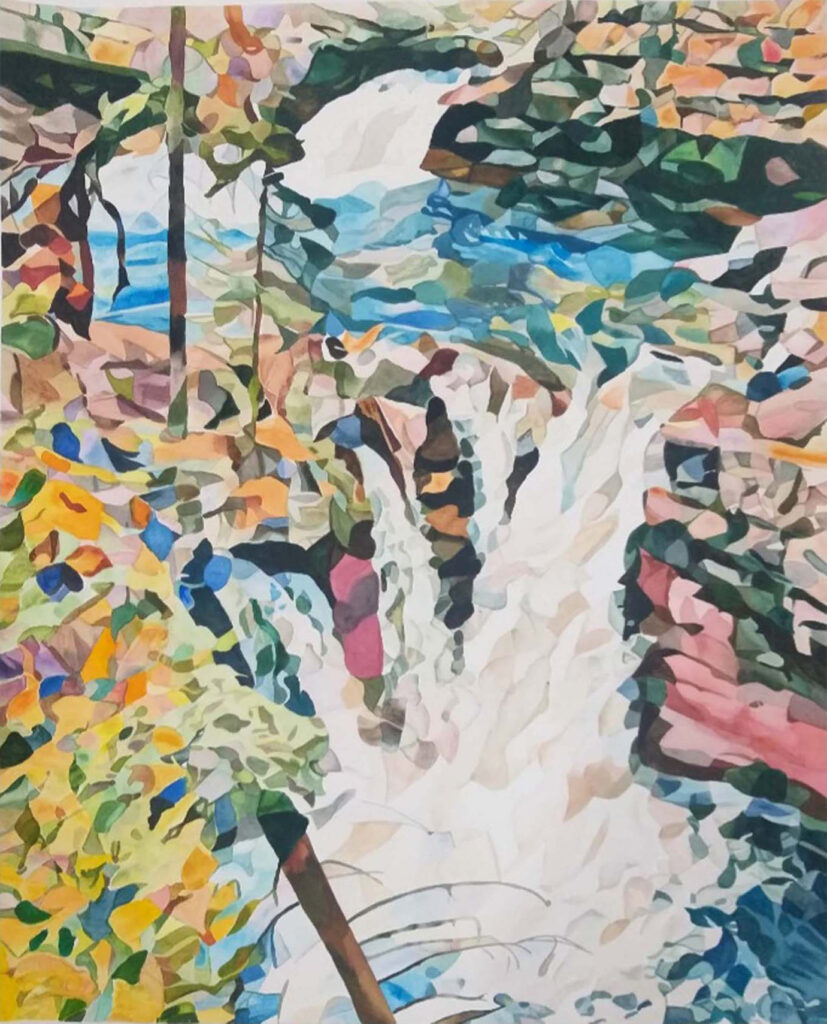
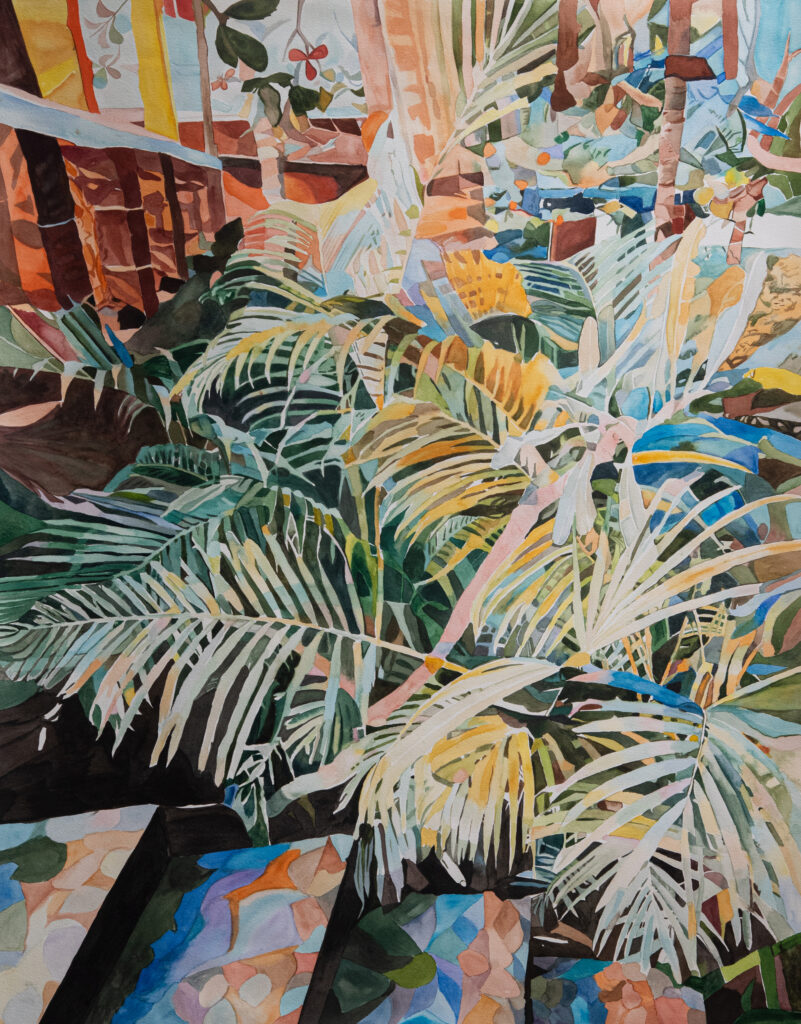
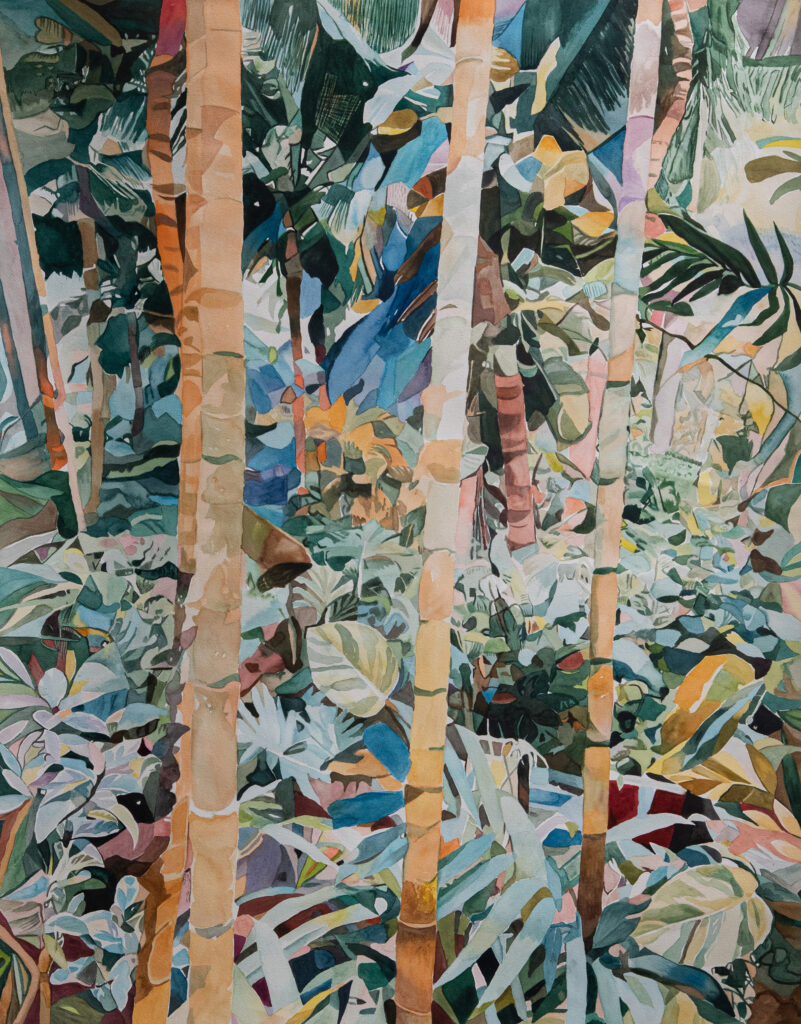
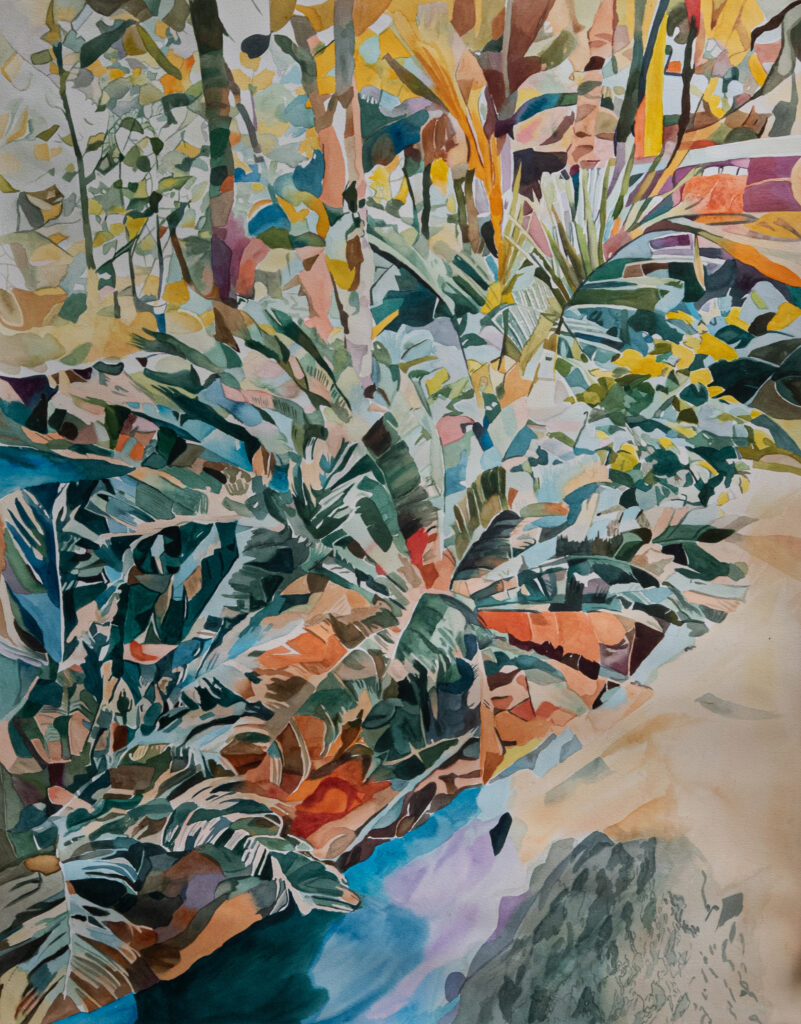
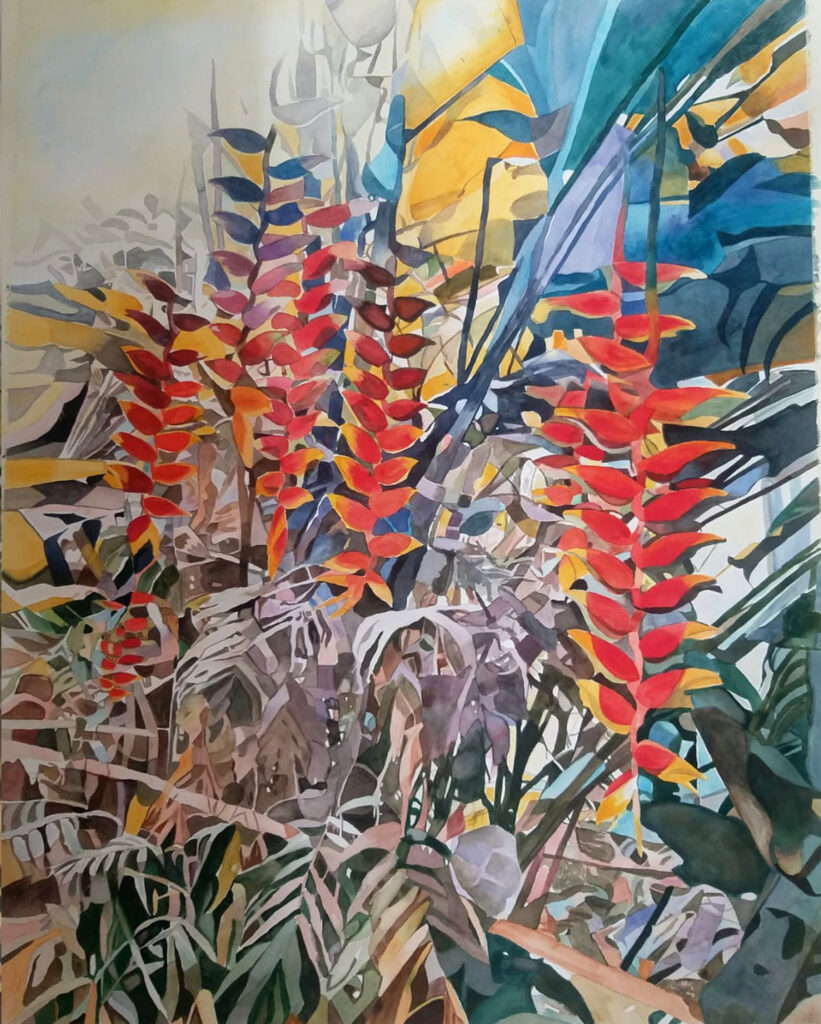
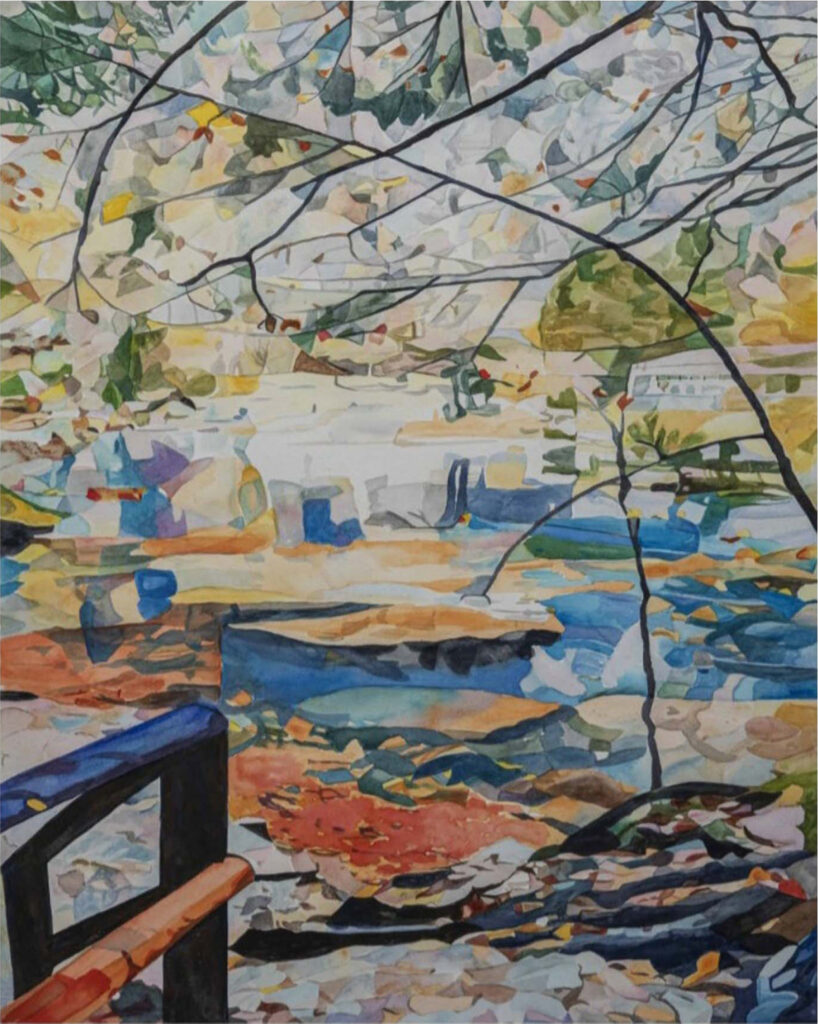
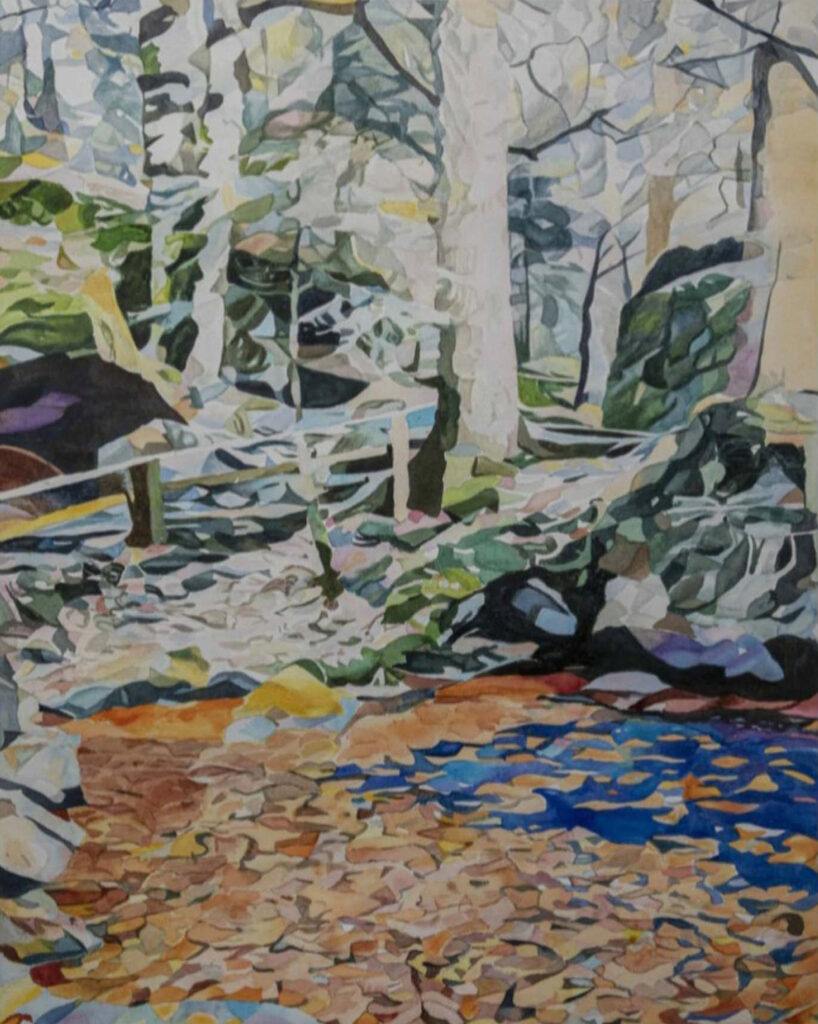
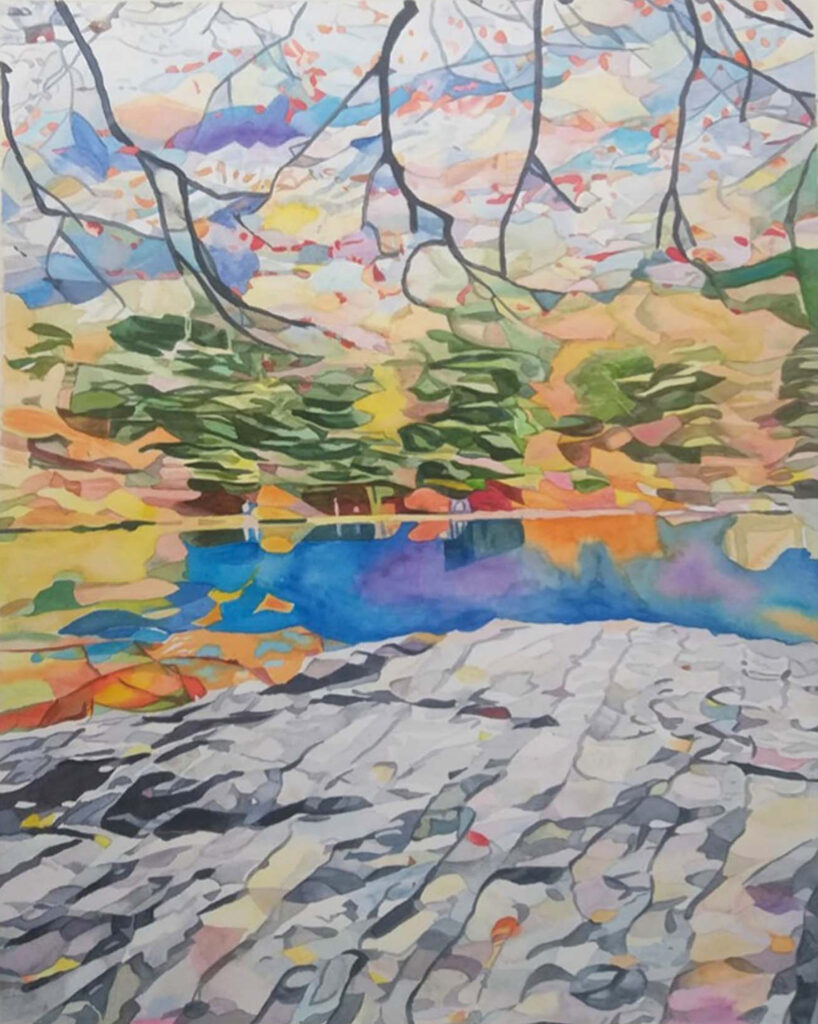
Dolly’s larger triptych works present the internal journey of an idealized landscape…as award winning writer Margaret Atwood writes in her poems, begins with a number of similarities that she can find between her mind and a physical landscape but then it migrates to an extended metaphor, it becomes a journey into the metal world of the artist. Here the visions are governed by the coming together of the personal and the universal that which appeals to the eye of the painter gets shared through her larger- format landscapes, to make apparent to the audience a bespoke take on the interpretation of the objects by the artist.
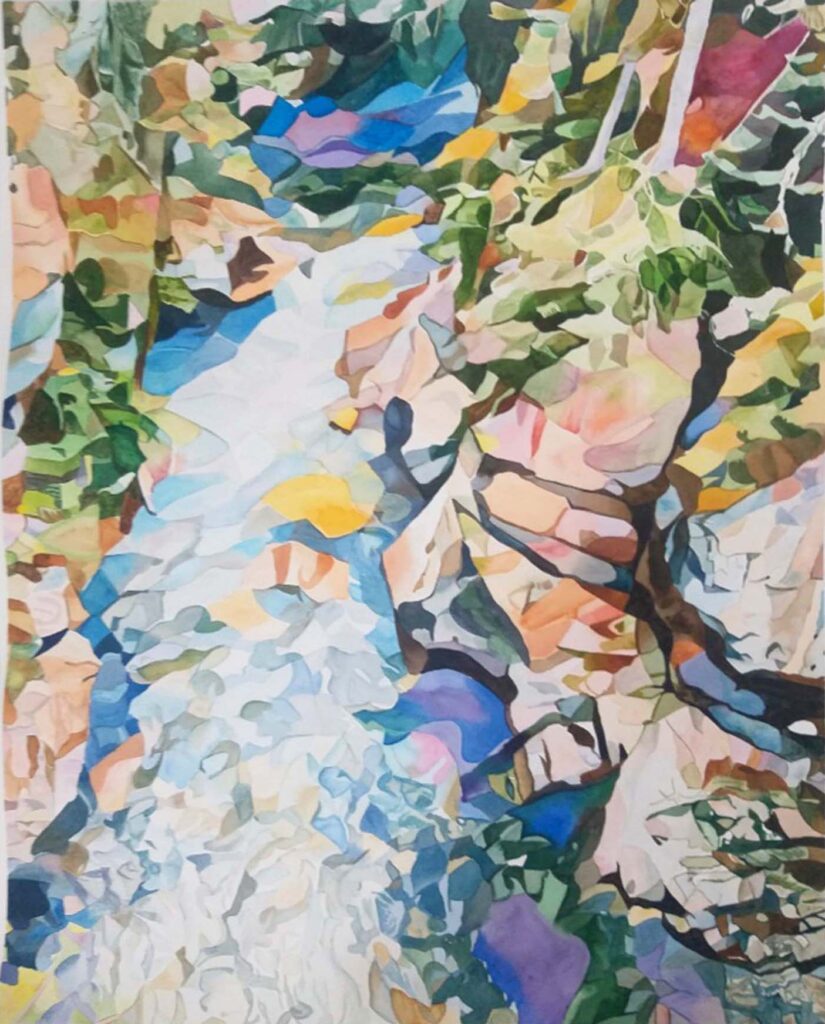
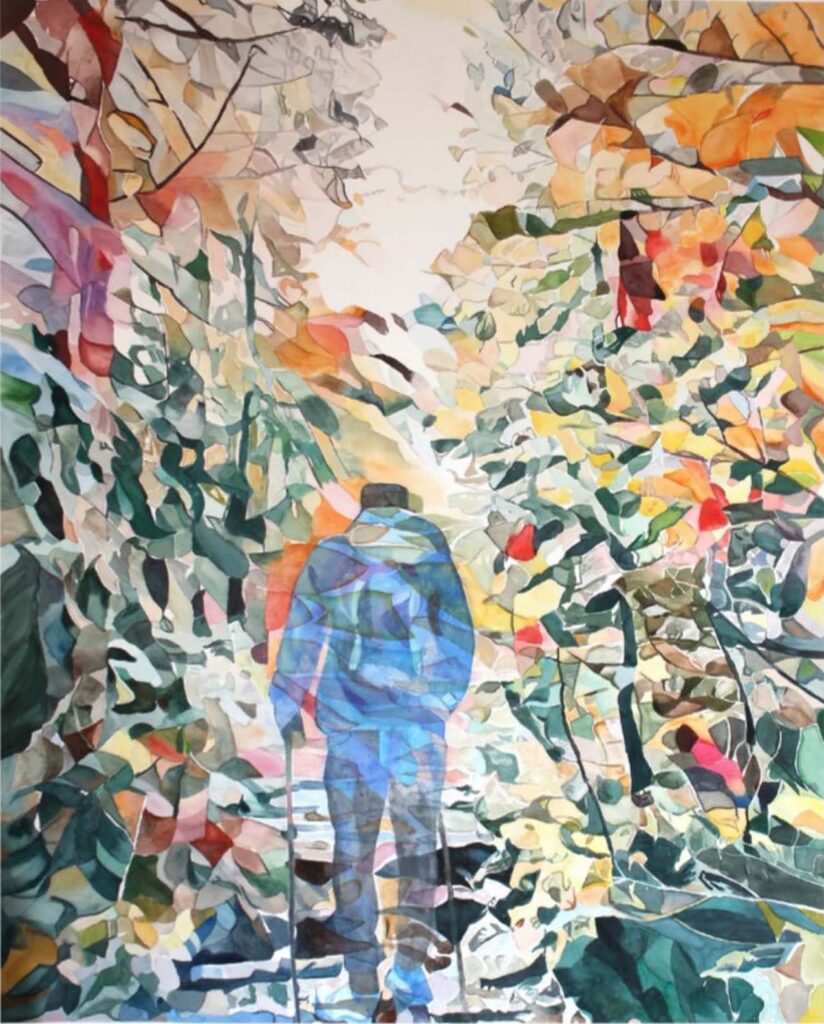
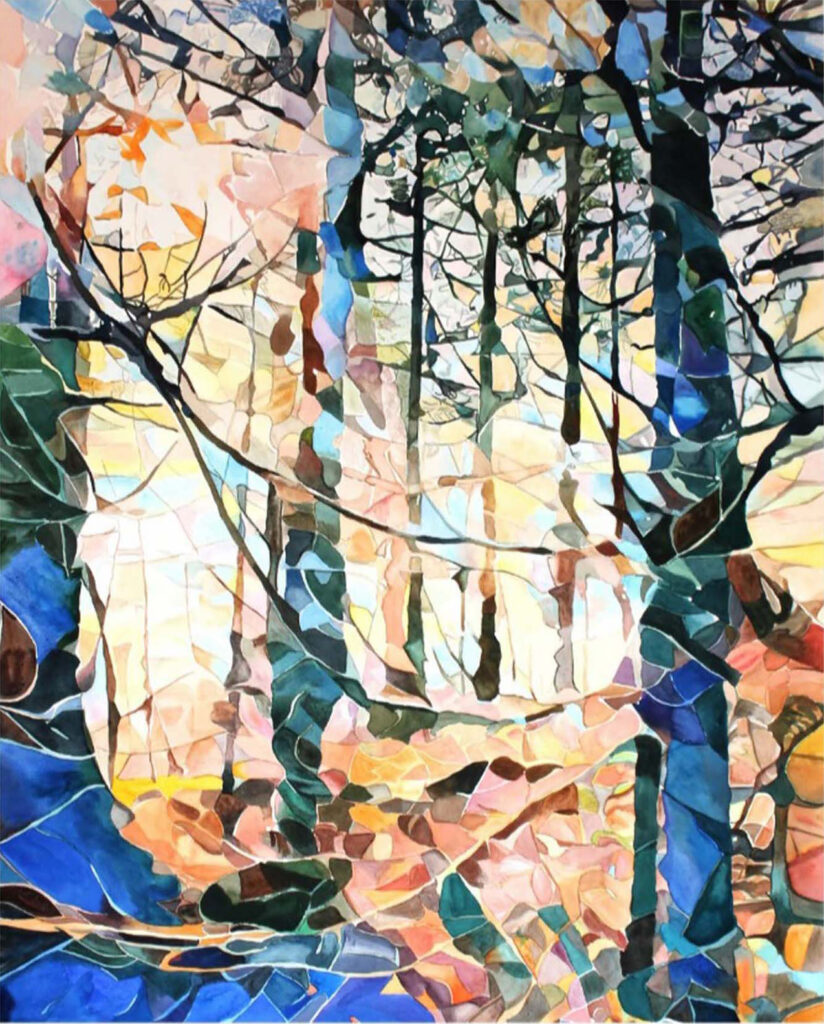
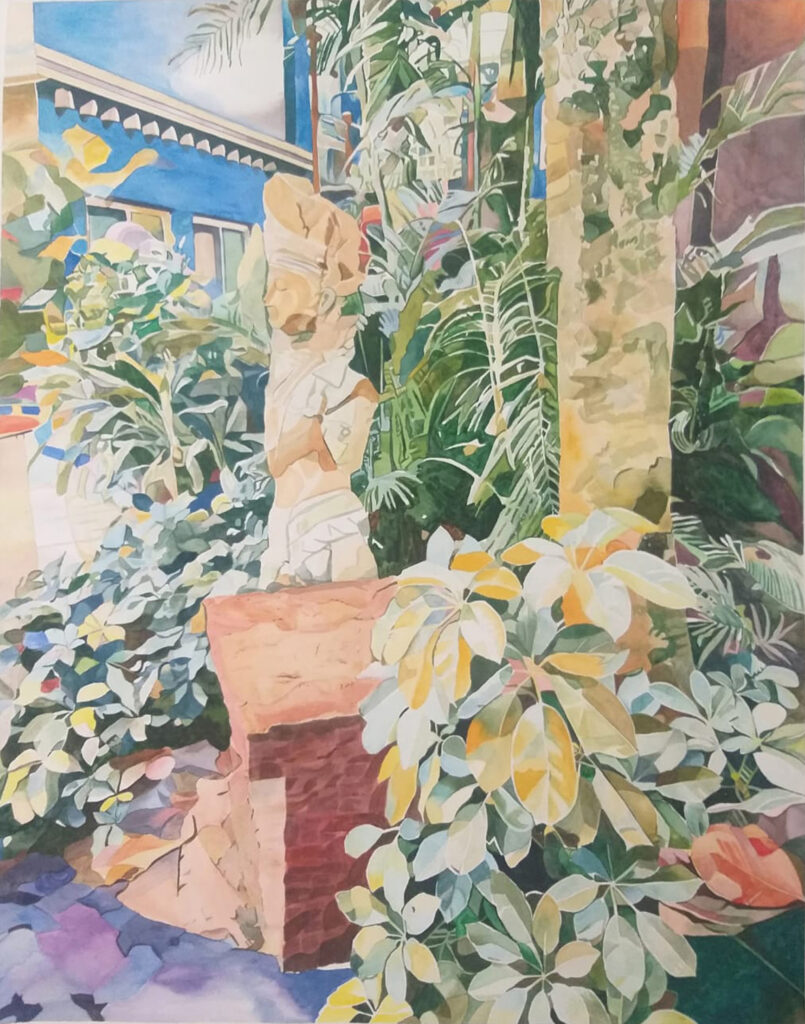
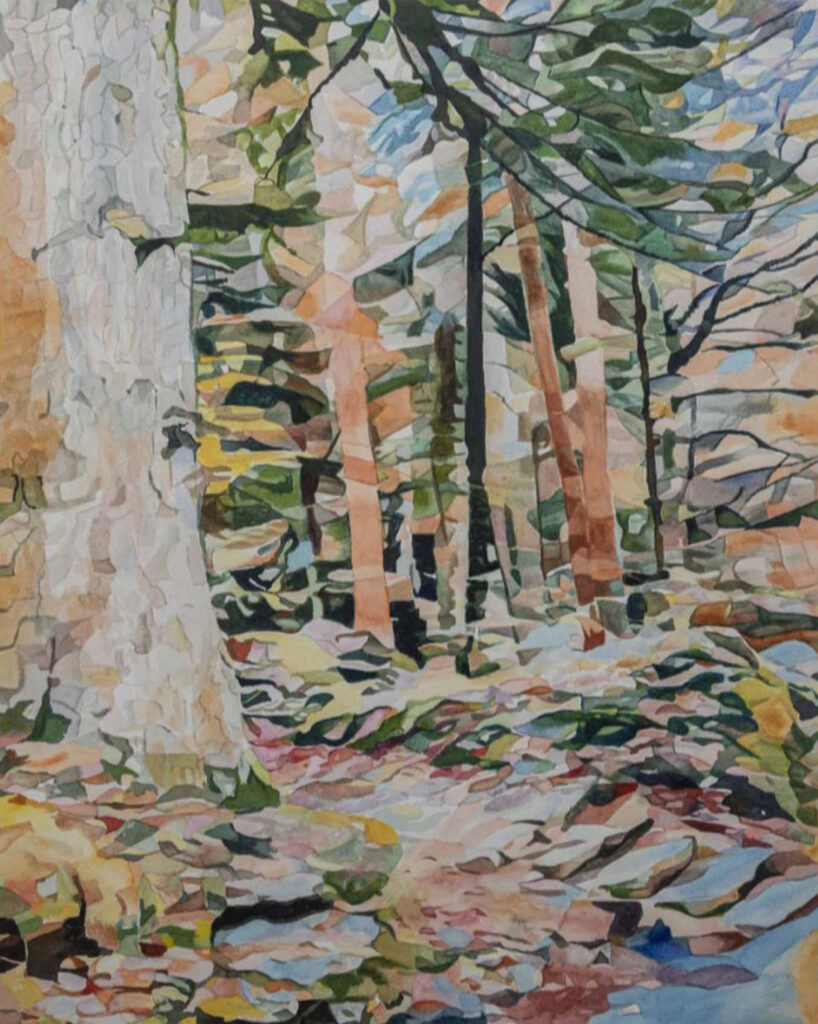
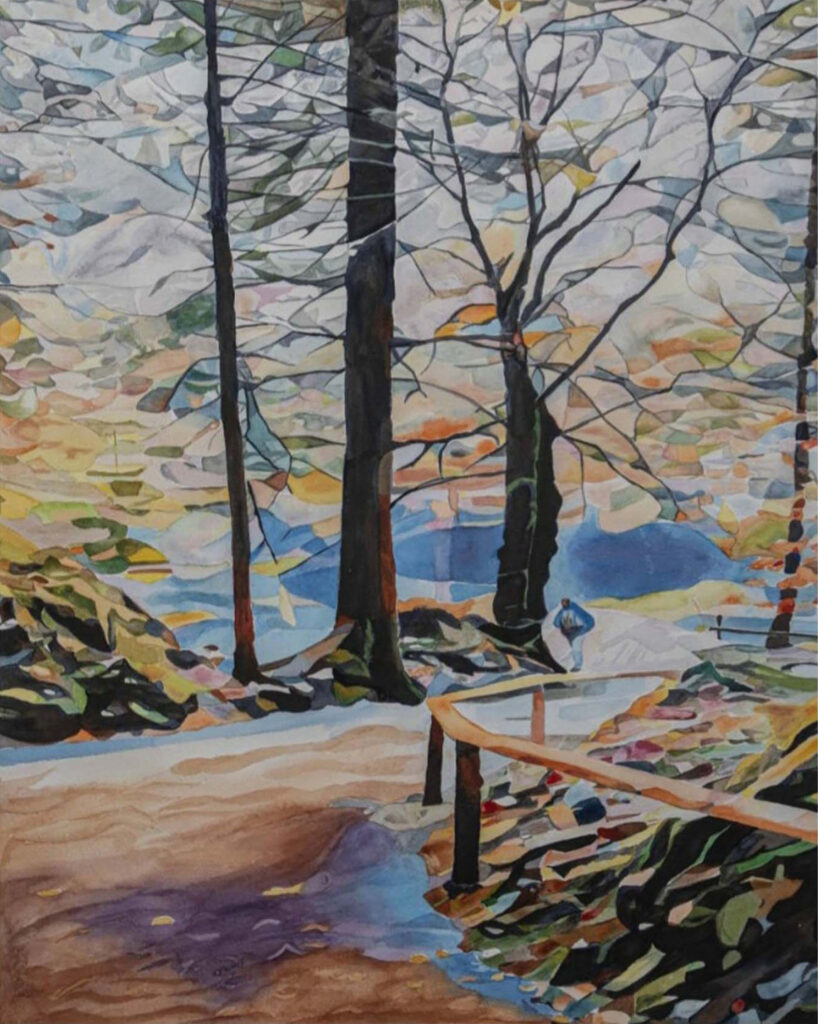
A figure becomes shadowy as it disappears among the trees that are taller than all around, covering the sky with their vastness and dappled colour. The lushness of nature takes over one’s vision in the artist’s skillful hands.